

Heat Pumps Installation for Your Home or Business in Cleethorpes
Cleethorpes has a particular property mix worth understanding before any heat pump conversation goes further: seafront Victorian terraces and former guesthouses along the promenade, solid inter-war semis set back from the coast, and a fair number of bungalows and holiday-let conversions. Each behaves differently once you ask how a building loses heat, and that question matters more with a heat pump than it ever did with a gas boiler.
A gas boiler can mask a lot of sins, burning hot and fast enough that even a draughty room eventually catches up. Heat pumps run at a lower, steadier flow temperature, so the building itself has to hold up its end. That’s why a proper survey looks past the boiler cupboard and assesses the actual fabric of the property, wall construction and window condition included.
18,000+ Installed Capacity
12,000+ Solar Panels Installed
2,450+ Happy Clients Worldwide
Why Choose EcoGDEA for Heat Pump Installation?
Every heat pump we fit meets Microgeneration Certification Scheme standards, covering equipment, sizing, and workmanship.
The engineer who surveys your Cleethorpes property is the same one who fits and commissions the system. No subcontractors passed halfway through.
Solid-wall seafront terraces sometimes need more thought than a standard cavity-wall semi. We'll tell you plainly if extra work is worth considering first.
Heat pumps sit alongside our solar and battery storage work, so we understand how your whole home energy setup fits together.
Humberside Areas We Cover
Types of Heat Pumps We Install
Air-To-Water System
This connects into your existing radiators or underfloor heating, so there’s no need to tear anything out. Heat pumps run most efficiently at lower flow temperatures than a gas boiler, which is why underfloor heating and larger radiators suit them well. On the seafront terraces, this is worth checking closely: many original Victorian radiators were sized for a boiler running much hotter, and some may need upsizing to keep rooms comfortable at the new, lower temperature.

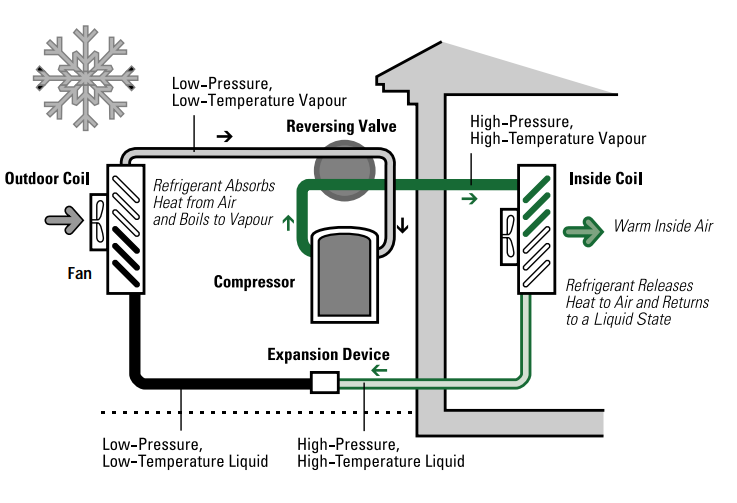
Air-To-Air System
Here, an outdoor unit draws warmth from the air and an indoor unit blows it directly into your rooms, skipping water heating altogether. Installation is quicker, since there’s minimal pipework involved, but it won’t heat your hot water. That makes it a sensible option for smaller Cleethorpes properties, or anywhere hot water is already covered by another source.
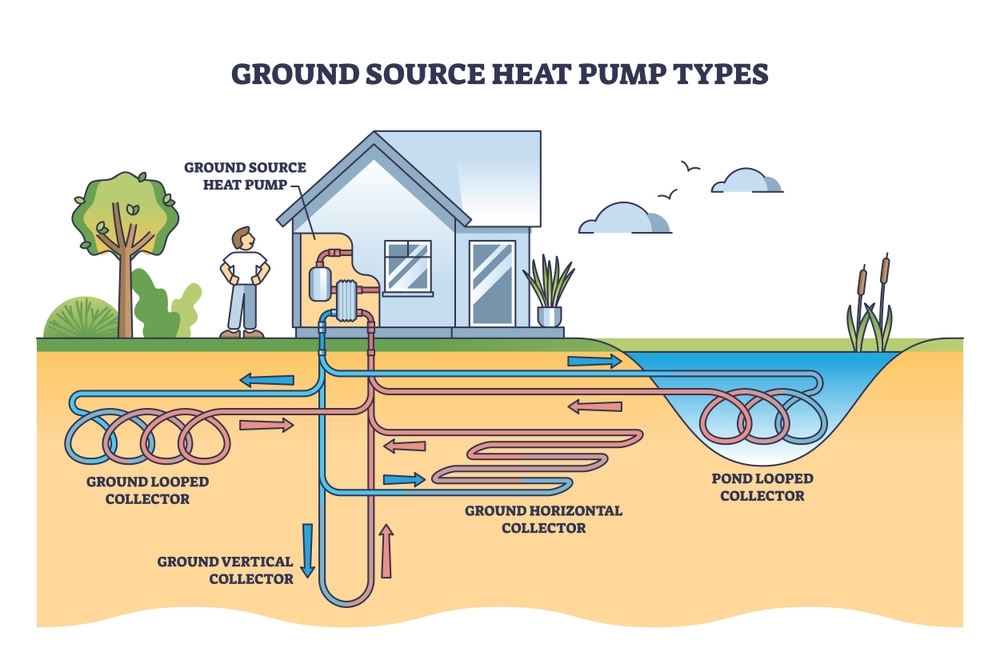
Ground Heat Pumps
Buried pipework draws heat from the ground itself, where temperature barely shifts through the seasons. Water mixed with antifreeze circulates through the loop, absorbing warmth before a heat exchanger passes it into your system. It’s a bigger job, needing room for a horizontal loop or a vertical borehole where space is tight, so this tends to suit the larger detached properties further from the seafront rather than the narrower terraced plots closer in.

FAQs
You Can Find All Answers Here
Often, yes, though it depends on their size relative to the room and the property's overall heat loss. A survey identifies whether any need upsizing before installation.
Not always, but it's worth checking. Solid-wall properties without a cavity tend to lose more heat than modern homes, so insulation improvements are sometimes recommended alongside the heat pump for the best performance.
Usually against a rear or side external wall, provided there's enough clearance for airflow. On tighter Cleethorpes terraces, this is one of the first things checked during survey, since it can affect which system size makes sense.
An air-to-water heat pump can, provided there's a suitable hot water cylinder, or space to fit one.
Roughly once a year is standard for any property. Coastal locations like Cleethorpes benefit from a closer look at the outdoor unit for salt exposure and debris during that visit.
Have Questions? We are Here to Help You!
ECOGDEA is among the world’s leading renewable energy solutions provider.